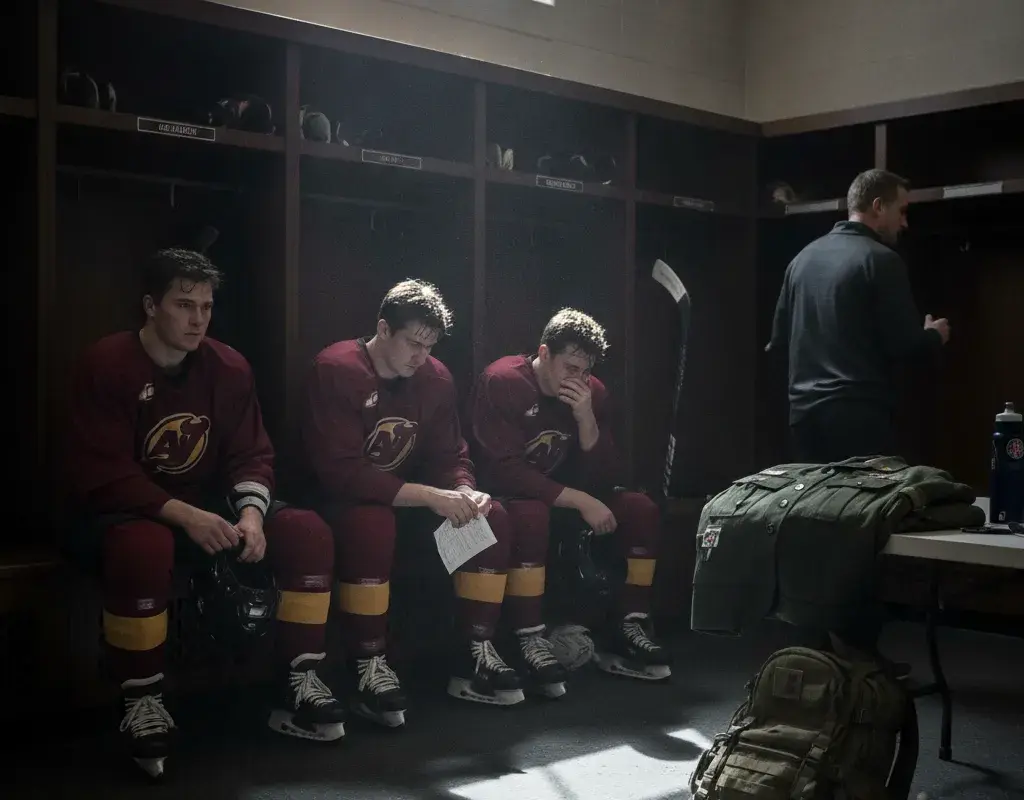
The return to the ice for the Arizona State hockey team has been overshadowed by a haunting void. Since August 20, when teammate Matthew Mayich collapsed during a grueling team workout and was placed on life support, the program has struggled to find its footing both physically and emotionally. While investigators scrutinize whether proper safety protocols were followed during a session supervised by a Green Beret brought in by the coaching staff, the players are grappling with a trauma that lacks any official playbook.
For those who witnessed Mayich’s collapse, the aftermath has been characterized by a complex mix of grief and apprehension. Seven players recently sent a detailed letter to University President Michael Crow, alleging that some teammates feared retaliation from the coaching staff if they spoke honestly about the conditions of that fateful workout. This climate of fear underscores a broader issue regarding psychological safety in high stakes athletics. Following these revelations, long time coach Greg Powers was eventually parted with after being placed on administrative leave.
Kristin Hoffner, an assistant dean at ASU’s College of Health Solutions, notes that sports culture often glorifies pushing through pain, which can inadvertently silence athletes who are struggling mentally. When players feel that admitting vulnerability could cost them playing time or lead to reprimands, they stop seeking professional help and instead lean solely on each other. National data supports this trend, with many male college athletes reporting feelings of inadequacy when considering therapy or hesitation to trust their coaches with mental health struggles.
Despite ASU’s offerings of comprehensive counseling and specialized sports psychologists, experts argue that availability does not always equal accessibility. True support requires a cultural shift where coaches actively encourage breaks and prioritize wellness over relentless toughness. As Mayich remains in critical condition with little hope for recovery, his teammates continue to navigate their loss day by day, highlighting a desperate need for athletic environments where mental fortitude is balanced with genuine emotional security.